Openers · Woodstock
Chain-Drive Opener Repair
Press the button and the opener hums for a second, then quits. The trolley is jammed hard against a bolt at the very end of the rail near the motor and will not budge in either direction.
Chain-Drive Opener Repair
In plain words
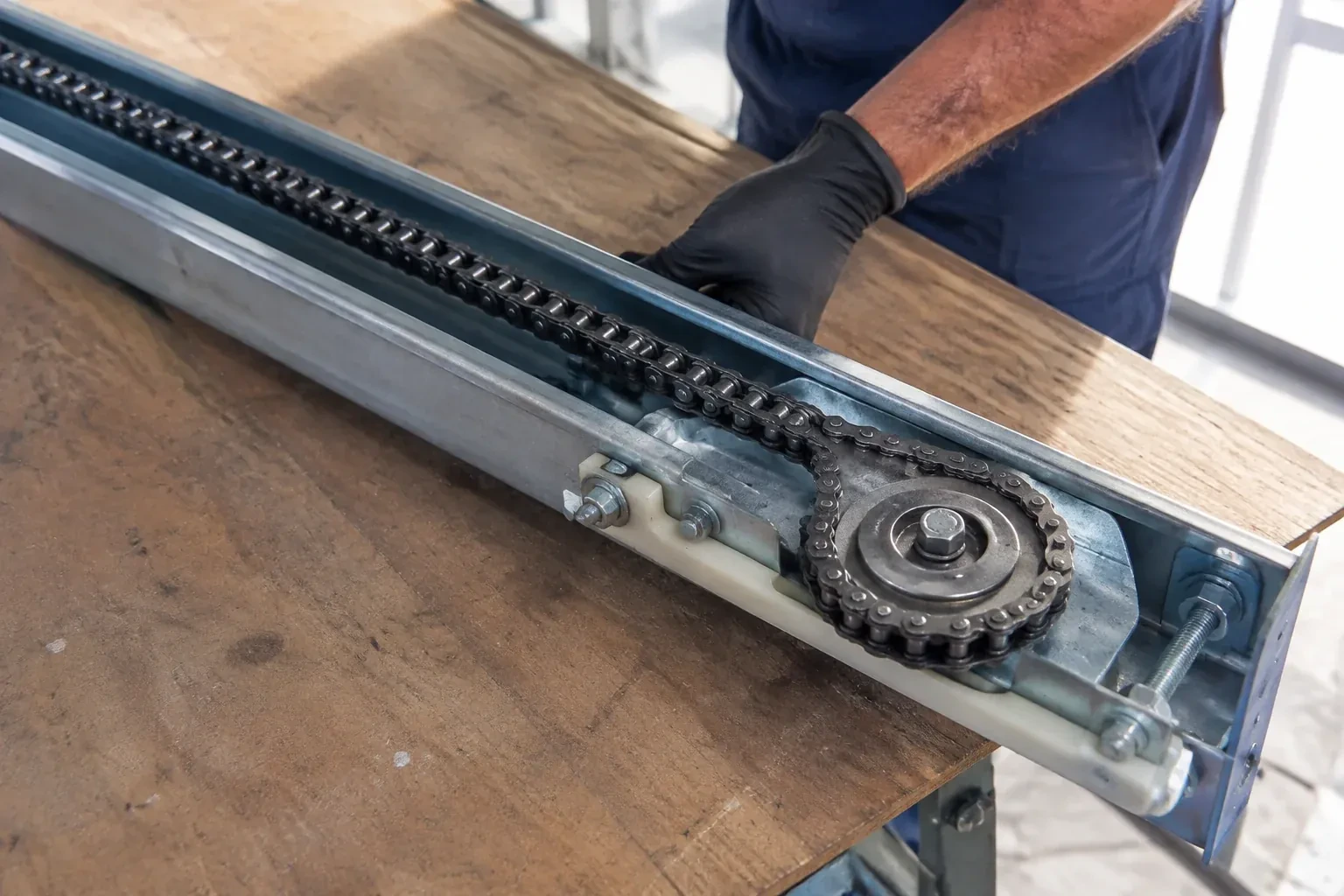
A chain drive is never silent, but it should be steady. New rattles, clanks and grinding each point somewhere specific. A chain slapping the rail is loose tension. A rhythmic clack at one spot is a worn or hooked sprocket tooth, or a stiff link passing over it. Grinding from the head is gear trouble. A rail that shakes has loose hangers or a header bracket working out of the wood. The technician runs the door by hand first to separate door noise from drive noise, then works through the drive from sprocket to trolley, tightening, tensioning or replacing what the sound identified.
How the visit goesThe chain in the detached garage went orange with rust over the winter, the links are stiff, and the opener strains and groans to pull the door up. By afternoon, once the garage warms, it behaves almost normally.
Woodstock
How the visit goes
Where the door stops and how hard it pushes
Two settings on the head decide the door's behaviour, and both are checked against what the door is doing. Travel limits set where the door stops in each direction; a door that stops shy of the floor, reverses on touching it or opens partway is out of adjustment. Force sets how much effort the operator treats as normal; too little and the door reverses for no reason, too much and the operator stops noticing an obstruction. The technician notes the current screw positions or the learned values, watches a full cycle and compares what the door does with what the settings say, before deciding whether the fault is in the drive parts or only in the settings.
Fitting a new chain
A stretched or rust-bound chain is replaced as a unit. The technician disconnects the door, slackens the tensioner and opens the master link, then draws the old chain off the sprocket, through the trolley and around the idler at the door end. The new chain, sized to the rail length, is threaded the same way, joined at the master link with the clip facing away from the direction of travel, and settled onto the sprocket teeth by hand. Any cable section on a combined chain-and-cable drive is checked for fraying and renewed if needed. The chain is then tensioned to the rail's specification and the trolley run by hand along its full length.
Two tests once a month
The protection built into the operator only counts if it still works, and two short checks each month keep you sure of it. Lay a scrap of 2x4 flat on the floor under the middle of the door and close it from the wall button; the door should climb back to open the moment it touches the wood. Then, with the door closing again, pass a broom handle through the beam of the low sensors; the door should reverse just the same. If either test is failed, stop using the operator and book an adjustment. It is a setting, and a small one, but it is the one that matters most.
Chain-Drive Opener Repair
In the van
- Chain tensioner nuts and shaft
- Roller chain with master link
- Rail hangers and header bracket
- Drive gear and worm gear kit
- Trolley release lever
What affects the quote
Same fees day, night or weekend
1Ceiling height and access
A head hung from a high or cathedral ceiling, or a rail boxed in by storage racks, a lift or ductwork, takes longer to reach and work on than one under a standard joist with a clear floor.
2Sensors and controls that fail the check
Photo eyes that are misaligned, mounted too high or dead, or a wall control that has stopped responding, are put right before the reversal can be proven and are itemised where parts are involved.
3What is known before the visit
A model number and photographs of the head, rail and chain let the technician arrive with the right gear kit or chain, which keeps the job to one visit rather than two.
Chain-Drive Opener Repair: questions
Will the safety reversal be tested as part of the repair?
Always, and after every adjustment, because changing tension, limits or force changes how the operator senses an obstruction. The door is closed onto a 38 mm block on the floor and must return to open on contact, then closed again while the low sensor beam is interrupted and must reverse the same way. If either test fails the settings are revisited until both pass, and you are shown the tests so you can repeat them monthly.
The motor runs but the door does not move. What has happened?
Four things are checked in order. The door may be disconnected at the red handle, or the manual lock may be engaged. The trolley may be jammed against the stop bolt at the end of the rail. Or the drive gear inside the head has stripped, so the motor turns without turning the sprocket; pale shavings under the cover confirm it. A broken spring also leaves a motor humming against a door far too heavy to lift, and that is spring work first.
What should I check before calling?
With the door closed, pull the red handle and try lifting the door by hand; note whether it is heavy or stays up on its own. Look at the chain for slack, rust or a broken link, and at the head for pale shavings. Note whether the motor runs at all, whether the door stops short or reverses, and where the trolley sits on the rail. The model on the head's label and a photo of the rail help too.
Openers & Access
- Belt-Drive Opener RepairHalfway up, every single time, the door hesitates and there is a ratcheting sound from the motor…
- Garage Door Opener ReplacementYou want the ceiling back.
- Photo-Eye Sensor Alignment or ReplacementSomeone backed the car in a little too far, a bin or a bicycle brushed the track, and since then…
Chain-Drive Opener Repair near you
A garage door in Woodstock rarely fails all at once. It gets louder, slower or less even first. Our services are arranged so you can act at any point: a tune-up while it is still working, a repair when something lets go, or a replacement when the door has earned its retirement.